Two pieces of advice that both sound right
Every October the same two messages land in front of homeowners. One says leave the leaves, that raking is an outdated habit and the leaf layer feeds soil and shelters pollinators. The other says a lawn buried in leaves comes out of winter dead. Both get repeated confidently, and customers understandably want to know which one applies to their yard.
The answer is that both are right about different parts of your property. The leave-the-leaves advice is sound and we support it, but it belongs in your beds and along your tree lines, not on turf that has to survive four months under Minnesota snowpack. Once you separate those two areas the whole question gets simple.
What happens under the snow
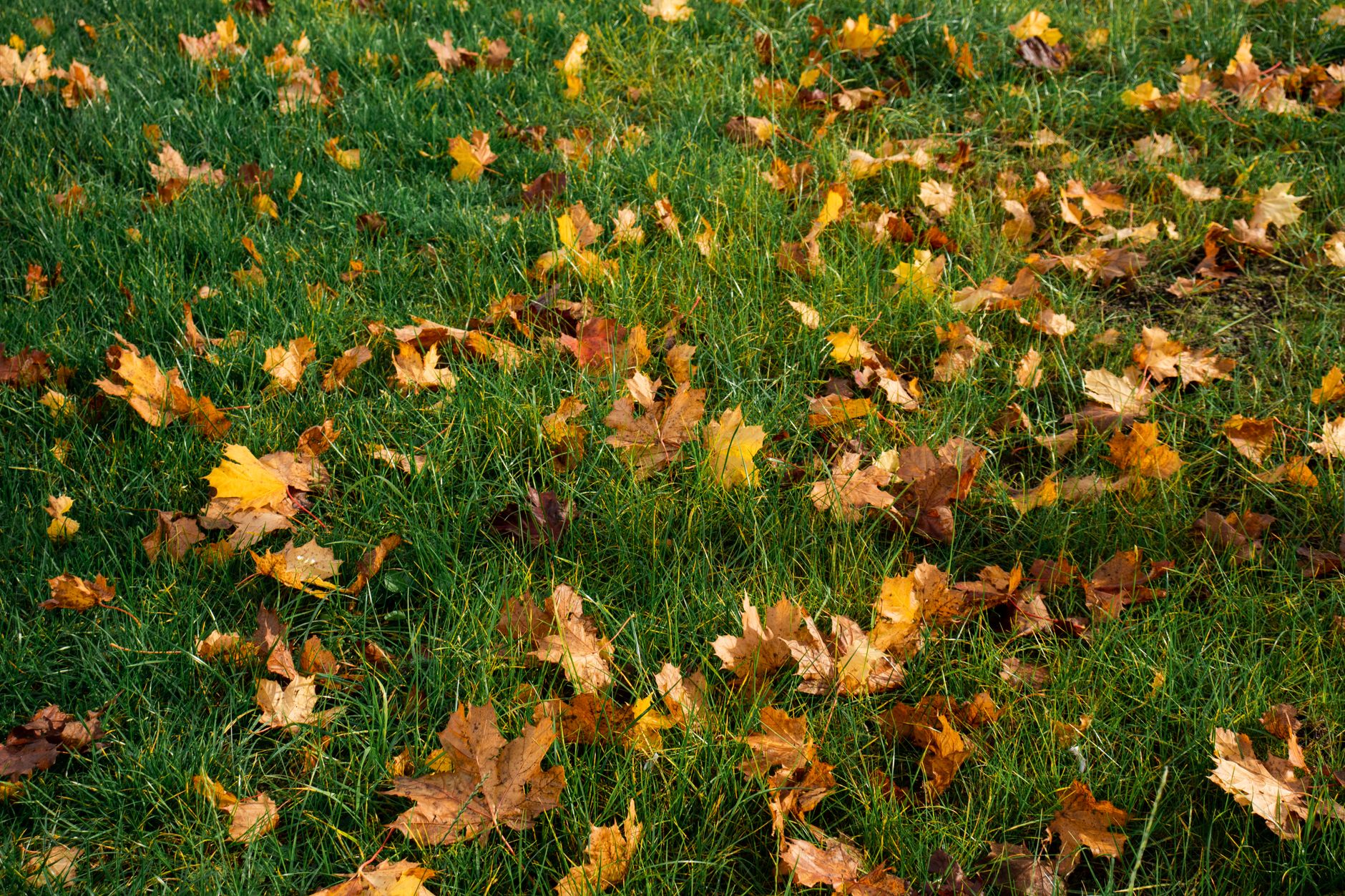
A leaf layer left on turf does not sit there loose and airy the way it looks in October. The first heavy rain mats it into a wet mass, then snow packs it flat against the crowns. What you have built is a sealed, dark, permanently damp blanket sitting directly on living grass for months.
Three things follow. The grass gets no light, which matters even in winter because cool-season turf is not fully dormant under snow. Air movement stops at the soil surface. And moisture that would normally evaporate is held right against the crown where the plant is most vulnerable.
That combination is the exact condition snow mold wants. Gray snow mold needs prolonged snow cover to develop, which the West Metro reliably provides, and pink snow mold does not even require snow, just cold and persistent moisture. Both show up in April as matted straw-colored patches with a crust on them, and the areas that were under leaf piles are almost always the worst of it. We walk properties every spring where you can read the shape of last fall's leaf drift in the dead turf. If you have wondered why one section of a lawn gets fungus while the rest looks fine, buried leaf cover is one of the usual answers.
The damage is rarely permanent, to be fair. Most snow mold turf recovers once it dries and gets raked open. But recovery costs you six weeks of a thin ugly lawn in the exact window when everyone is outside looking at it, and severe cases kill the crown outright and need reseeding.
The part where leaving leaves is genuinely correct
Now the other half, because the mulch-mowing advice is not a myth and we use it ourselves.
A light scattering of leaves chopped fine by a mower is good for a lawn. The pieces fall between the blades, reach the soil surface, and break down over the season, returning organic matter and a modest amount of nutrients. University research on this is consistent and it holds up in Minnesota. It saves you work and it feeds the soil.
The whole thing turns on one threshold: after you mow, can you still see grass? If the chopped material has disappeared into the canopy and the lawn reads green, you are done and you did it right. If there is a visible layer of leaf litter sitting on top, you have exceeded what mulching can handle and the rest needs to come off. Most West Metro properties with mature trees cross that line sometime in the second week of leaf drop.
Leaf type changes the math more than people expect. Silver and sugar maple shred easily and vanish into turf. Oak is leathery and slow, and a heavy oak drop will still be recognizable as leaves the following June. If your lot is oak-dominant, mulch less and remove more.
Your beds want the leaves
Here is where the pollinator advice fits, and it is a real thing rather than a consolation prize.
Leaf litter in planting beds insulates perennial crowns through freeze and thaw cycles, and it is overwintering habitat for a long list of beneficial insects, including native bees and the butterflies people put out gardens for. Beds are not turf. Nothing there needs to photosynthesize in March, and the plants that live there evolved under exactly this layer.
So the practical arrangement on most properties we service looks like this: turf gets cleared, beds keep a moderate leaf layer, and we pull material back off plant crowns so nothing is smothered directly. A few exceptions are worth knowing. Beds against the foundation should stay thinner, since deep damp litter against siding invites rodents looking for a winter address. And if a bed had a real disease problem this season, that litter is inoculum and should go rather than overwinter next to the same plants.
Getting the timing right in the West Metro
The mistake we see more than any other is cleaning up once, in early October, feeling finished, and then watching two thirds of the leaves come down afterward.
Leaf drop here runs from late September through the end of October, and the trees do not coordinate. Ash goes early, maple works through the middle, and oak hangs on stubbornly into November. A single pass on the wrong weekend means the lawn goes under snow covered anyway.
What actually works is mulch-mowing through the drop as part of regular mowing visits, keeping the layer from ever accumulating, then a real cleanup after the last significant drop and before the ground freezes. In our area that final window is usually the last week of October into the first half of November, and it is a narrow one. Wait too long and you are raking frozen leaves out of a snow crust, which nobody enjoys and which does not work well.
Two things belong in that final pass that people forget. Clear the gutter line, because leaf debris packed along the roof edge feeds ice dams once the melt and refreeze cycle starts. And get the driveway and walk edges clean, since a clear edge gives the plow a line to follow and keeps the first pass of the season from tearing up turf.
Our fall cleanups cover leaf removal and hauling, bed clean-out, perennial cutbacks, edge refresh, and blow-down, and everything leaves the property unless you want a pile kept for compost. Fall is also the strongest feeding window of the year, so a cleanup paired with a fall application is the combination that makes the difference visible next April.
Frequently asked questions
Is it bad to leave leaves on your lawn over the winter in Minnesota?
On turf, yes. A leaf layer mats down under rain and snow into a sealed damp blanket against the grass crowns, blocking light and air for months and creating ideal conditions for gray and pink snow mold. Lawns under heavy leaf cover routinely come out of winter with matted dead patches shaped exactly like last fall's leaf drifts. In planting beds, by contrast, leaving leaves is beneficial and worth doing.
Can I just mulch my leaves with the mower instead of raking?
Often yes, within limits. Chopped leaves fall between grass blades, break down over the season, and return organic matter to the soil. The test is simple: after mowing, you should still see grass rather than a visible layer of leaf litter sitting on top. Light to moderate drop mulches fine, heavy drop does not, and leathery oak leaves handle far worse than maple.
When should fall cleanup be done in the West Metro?
Leaf drop runs from late September through the end of October, with oak often holding into November. The final cleanup should happen after the last significant drop but before the ground freezes, which in Wright and Hennepin counties usually falls between the last week of October and mid-November. Mulch-mowing through the season keeps the layer manageable until that final pass.
What is snow mold and how do I prevent it?
Snow mold is a fungal disease that develops on turf held cold and damp for extended periods, appearing in spring as matted straw-colored patches. Gray snow mold requires prolonged snow cover while pink snow mold needs only cold and persistent moisture. Prevention is largely mechanical: clear leaf litter off turf before winter, avoid heavy fast-release nitrogen late in the season, and keep the final mow at a moderate height so grass does not mat.
Should I leave leaves in my garden beds for pollinators?
Yes, and this is where the leave-the-leaves advice genuinely applies. Leaf litter insulates perennial crowns against freeze and thaw cycles and provides overwintering habitat for native bees, butterflies, and other beneficial insects. Pull litter back off plant crowns so nothing is smothered, keep it thinner against the foundation to discourage rodents, and remove litter from any bed that had a significant disease problem this season.
Does a fall cleanup include gutter and driveway edges?
Ours does, and both matter more than they appear to. Leaf debris packed along the roof line contributes to ice dams once melting and refreezing begins in winter. Clean driveway and walk edges give the plow a defined line to follow, which prevents turf damage during the first passes of the snow season.