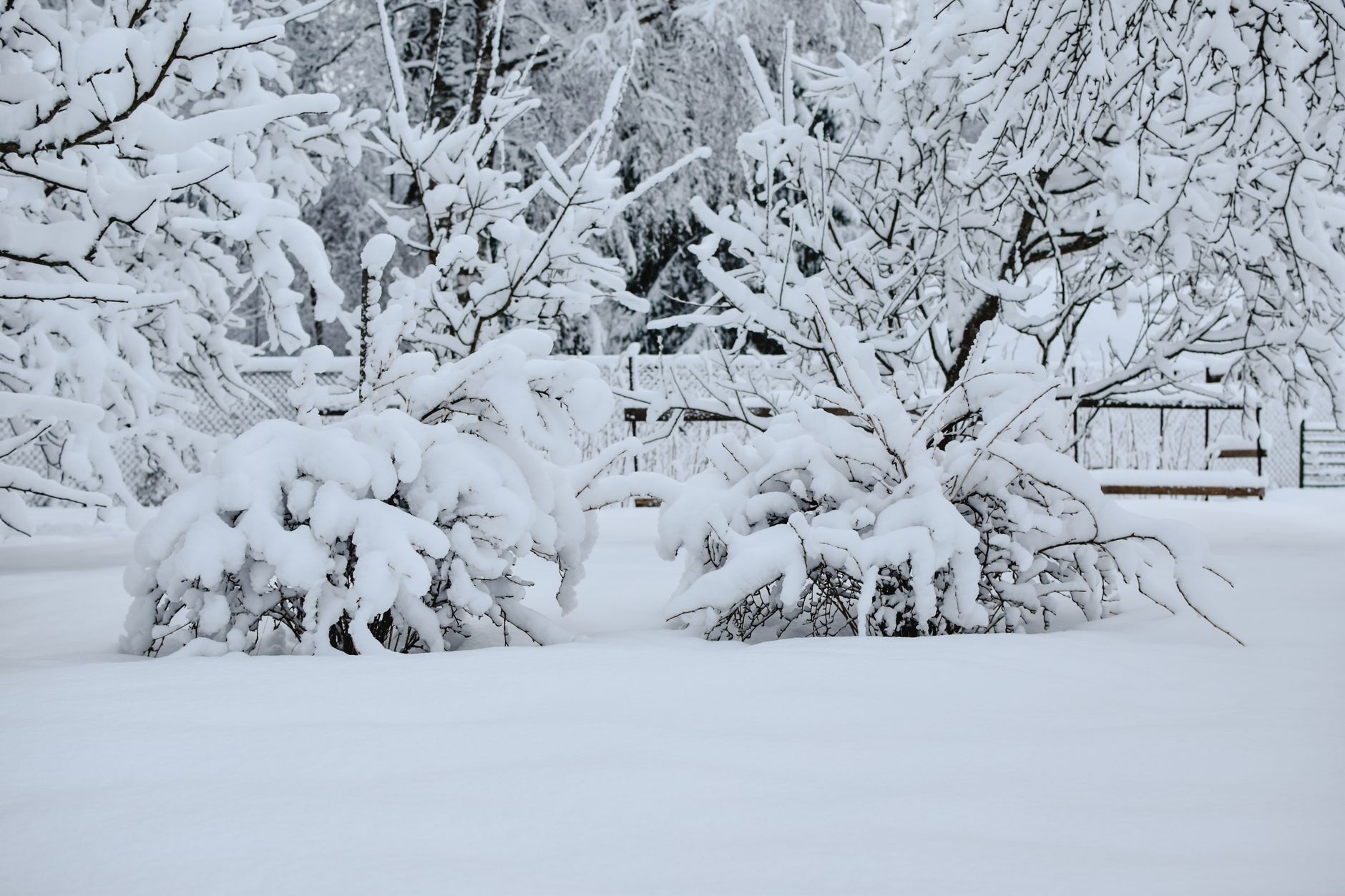
Most winter damage on shrubs shows up in April, and by then the only fix is the pruning saw. An arborvitae gone rusty brown on the driveway side, or an upright yew split open by a February storm, nearly always traces back to something that could have been handled in October or early November.
We see the same pattern on properties around Rockford and Delano every spring. Here's what causes it and what to do before the ground freezes.
Water before the ground locks up
Evergreens keep losing moisture through their needles all winter. On a bright, windy day in February an arborvitae is drying out, and if the soil around its roots is frozen solid it can't pull any water back in. The result is winter burn: needles that turn brown on the south and west sides, the sides that catch the most sun and wind.
The best protection is a plant that goes into winter fully hydrated. After a dry fall, give evergreens and anything planted in the last two or three years a slow, deep soak every week or two until the soil freezes, which around here usually runs into early November. A hose left trickling at the base for an hour does more than a sprinkler pass across the top. Young trees need it too, since a maple or linden in its first few seasons has a small root system and little in reserve.
Once the ground is frozen, stop. Water poured on frozen soil runs off or turns to ice.
Burlap goes on the windward side, loosely
Burlap earns its keep on the plants that burn year after year, mostly arborvitae, yews and young evergreens on an exposed corner. A screen stapled to stakes a few inches off the south and west sides blocks the sun and wind that cause the damage. Wrapping a shrub tight traps moisture against the foliage and gives voles a sheltered place to chew.
Drive the stakes before the ground freezes and hang the burlap in November. Take it down in late March or early April once the stretch of hard sun on frozen ground is over.
Rabbits feed at the height of the snow
Cottontails eat bark and buds all winter. Their favorites in West Metro yards are burning bush, serviceberry, young apple and crabapple, plus most shrub roses. A rabbit nibbling at ground level in November is nibbling two feet higher in February, because it's standing on the snowpack.
A cylinder of quarter-inch hardware cloth around a young trunk works well, but it needs to stand about 18 to 24 inches above the deepest snow you expect. In a spot where snow drifts, that can mean a guard three or four feet tall. Push the bottom an inch or two into the soil so voles can't tunnel under, and leave a gap between the mesh and the bark. Take plastic spiral wraps off young trunks in spring so they don't hold moisture against the bark all summer.
On low shrubs you can't practically fence, repellents help between snowfalls but need reapplying after each storm.
Salt spray and plow piles
Plants along the driveway, the front walk and the street take the worst of winter, and the weather has little to do with it.
Salt reaches them two ways. Spray kicks up off the road and coats whatever is within several feet of the curb, which is why evergreens near the road brown on the road side first. Meltwater also carries dissolved salt into beds next to pavement, where it builds up in the soil over the season. Our post on which ice melt is safe for concrete covers the product side. For the plants, use less, keep it on the pavement, and give those beds a deep watering in spring to flush out what soaked in.
Plow piles are the other half. A pile shoved onto a row of spirea or dwarf lilac is heavy, wet and packed, and it sits there until April. Branches snap under the weight, and everything underneath gets a salt dose as it melts. The answer is deciding where the snow goes before it falls. Stake the edges of any bed near the driveway, and tell whoever plows for you which spots are off limits. On our snow removal properties pile placement gets settled up front for exactly this reason, and the October driveway prep checklist covers staking.
Tie up the multi-stem evergreens
Upright arborvitae and junipers with several leaders are the ones that split. Heavy wet snow lands in the center, pries the stems apart, and the shrub never closes back up. A few loose loops of soft twine or strips of old fabric, spiraling around the outside from bottom to top, hold the leaders together through the season. Skip wire, and take the ties off in spring.
Brush heavy snow off shrubs with an upward sweep of a broom, but leave ice alone. Knocking at ice-coated branches breaks more wood than the ice would have.
What to prune now and what to leave
Fall is a poor time for most shaping. Here's how we split it:
- Prune now: dead, broken or diseased branches on anything. A cracked limb is better off removed before snow loads it.
- Wait until right after bloom: lilac, forsythia, early spirea and other spring bloomers. They set next year's flower buds over the summer, so a fall trim cuts off next May's flowers.
- Wait until late winter: most deciduous trees and summer bloomers like panicle hydrangea and potentilla. February and March, while everything is dormant and you can see the branch structure, is the better window.
- Oaks: dormant season only, and never April through July, when fresh cuts draw the beetles that spread oak wilt.
Our shrub and perennial care times pruning by plant type for that reason, so next season's blooms stay on the plant.
Frequently asked questions
When should I put burlap on shrubs in Minnesota?
Set the stakes in October before the ground freezes, then hang the burlap in November and remove it in late March or early April. Burlap works best as a screen a few inches off the south and west sides of arborvitae, yews and young evergreens, since those sides take the most sun and wind. Tight wrapping traps moisture and is rarely needed.
How late in the fall should I water evergreens?
Keep giving evergreens and recently planted trees a slow, deep soak every week or two until the soil freezes, which in the West Metro usually means into early November. Plants that go into winter well hydrated resist winter burn far better. Once the ground is frozen, stop watering.
How tall should rabbit guards be?
Rabbit guards should stand about 18 to 24 inches above the deepest snow you expect, because rabbits feed from the top of the snowpack. A guard that looks tall in November can be buried by February, especially where snow drifts. Use quarter-inch hardware cloth and push the bottom an inch or two into the soil to stop voles.
Why do my arborvitae turn brown on one side over winter?
Usually winter burn or road salt. Winter burn happens when sun and wind pull moisture from the needles while the roots sit in frozen soil, and it shows on the south and west sides. Salt damage shows on the side facing the street or driveway. Deep fall watering and burlap help with the first, and less ice melt plus keeping plow piles away help with the second.
Can my snow plow service keep piles off my landscaping?
Yes, if the beds are marked and the plan is set before the season. Liberty plows in Rockford, Delano, Buffalo, Maple Grove, Plymouth and the surrounding West Metro, and we settle pile locations with snow customers up front so beds and young trees near the driveway stay clear.