The question behind the question
Nobody asks this out of curiosity about weather. People ask because they are trying to figure out how much time they have, and the honest answer is less than you think, but probably not for the reason you expect.
After 25 winters running routes out of Rockford, here is the pattern we plan around and what it means for your calendar.
First snow and first real snow are two different dates
The most useful thing to understand about a Minnesota winter is that the first snowfall and the first snowfall that matters are usually weeks apart, and people conflate them constantly.
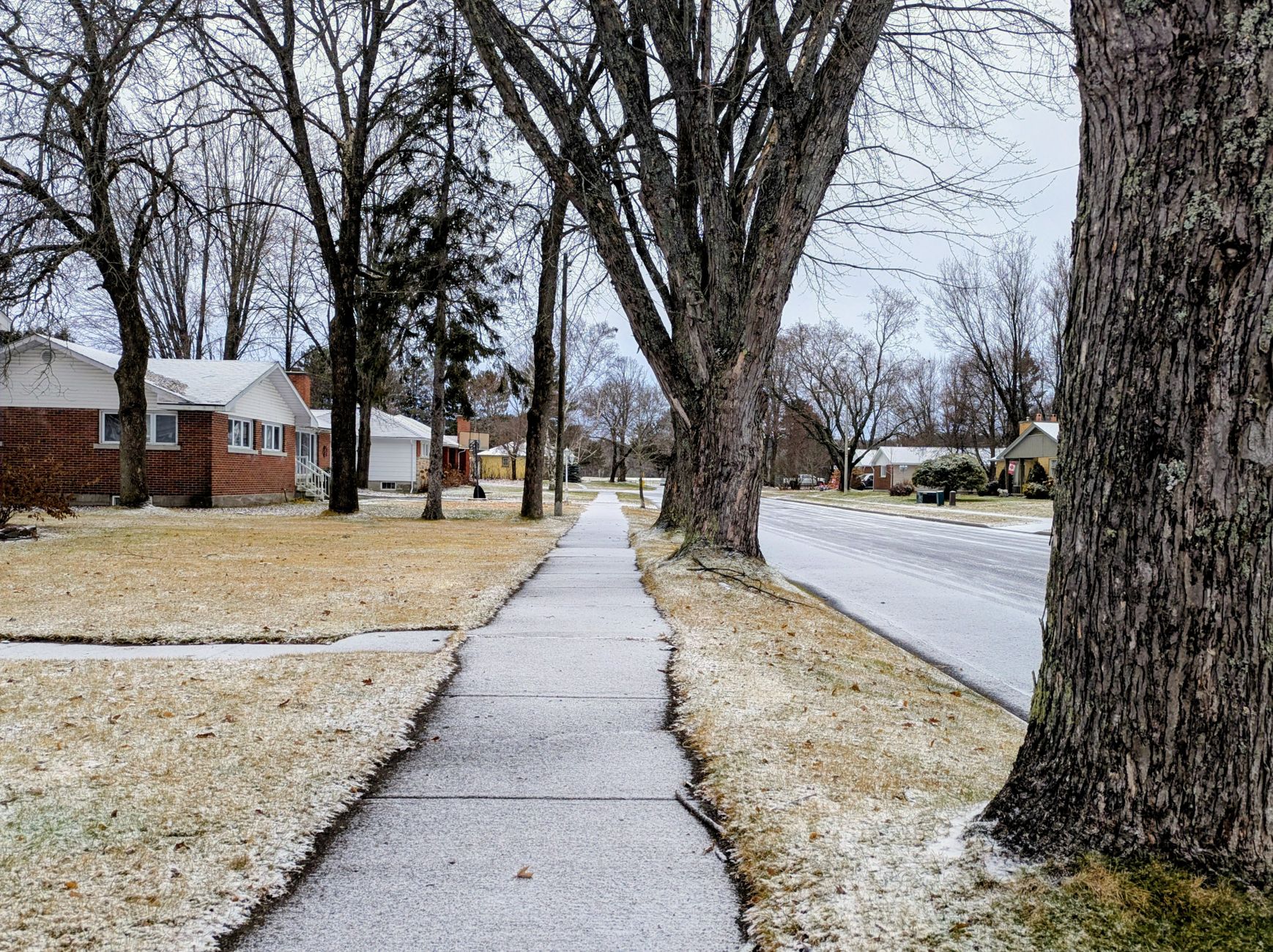
Around the Twin Cities metro, a first trace or dusting typically arrives sometime in late October. It melts by lunch, everyone takes a picture of it, and nothing about your life changes. The first accumulation heavy enough to actually plow, meaning a couple of inches that sticks around, more commonly lands somewhere in mid to late November in a typical year.
That gap is exactly where people get caught. The October dusting reads as an early warning, so the actual preparation gets postponed, and then a genuine storm arrives in November while the driveway markers are still in the garage and the snow contractor everyone meant to call has a full route.
Worth saying clearly: these are typical patterns, not promises. Minnesota has produced plowable snow in October and it has produced Novembers where nothing happened until December. The variability is the point, and it is a reason to be ready early rather than a reason to gamble.
What the season actually looks like
Once winter commits, the working season here runs roughly from November through March, and April storms are not unusual enough to be surprising. We have plowed in April more than once.
Within that, the rhythm has some structure. December through February is when the snow is most persistent and when snowpack builds, and it is the stretch that determines whether your lawn comes out of winter clean or matted. The largest single storms, though, tend to cluster at the shoulders. Late November through December and again in March produce the heavy wet events, because the air is marginally warmer and holds more moisture. That March snow is the kind that breaks shovels, snaps tree limbs, and takes twice as long to move.
Season totals swing hard. Consecutive winters in this area can differ by a factor of two or more in total snowfall, and neither one is abnormal. That variability is the actual argument underneath the seasonal contract question: a seasonal price is one number regardless of what falls, and per-event billing means you carry the weather risk yourself. In a light year per-event wins and in a heavy year seasonal does, and since nobody knows which one is coming, the real question is how much a bad February would hurt your budget.
Why the first storm is always a scramble
Every year the first plowable event produces the same phone calls, and it is worth understanding why so you are not one of them.
Snow routes are not assembled when it snows. They get built through September and October, deliberately clustered by neighborhood, because a crew handling thirty driveways packed tight across Rockford and Delano clears everyone hours faster than a crew crossing the county between jobs. Once a route is full, adding one property outside the cluster delays every customer already on it, so we say no.
Which means the answer to when you should call is not November. It is now. Routes fill in signup order, and they fill at different rates in different communities, so Buffalo and St. Michael and Maple Grove each have their own timeline. Every winter we turn away pleasant people who called during the first storm, and it is the least enjoyable part of the job.
Working backward from the first storm
If mid to late November is the realistic target for the first real event, the calendar in front of you looks something like this.
- September and October: get winter service arranged while routes still have room. This is also peak season for aeration, overseeding, and fall feeding, so it is one conversation rather than two.
- October: stake the driveway edges and mark every hazard while the ground is still soft. Sprinkler heads, landscape lights, drain grates, and wall corners all disappear under the first real snow. The full pre-winter driveway checklist is here, and most of it stops being possible once the ground freezes.
- Late October into early November: final cleanup after the last leaf drop. Leaves left matted on turf under snowpack are how lawns come out of April with dead patches.
- Early November: last mow at a moderate height, hoses drained, anything sitting near the driveway moved for the season.
None of it takes long individually. The problem is that it all has to happen inside the same six-week window, and that window is closing while the weather still feels fine.
The advantage of already knowing us
One practical note for lawn customers. Winter service on a property we already maintain goes smoother, because the crew clearing your driveway in January is the crew that mowed it in July. They know where the turf edge sits, where the sprinkler heads are, which corner the snow can go without blocking your sight line, and that the apron drops off harder than it looks.
Everything we do runs with our own crews and our own equipment, out of the shop on Highway 55 in Rockford, across Wright and Hennepin counties. Estimates are free and take a few minutes. If you already know you want the driveway handled this winter, the calendar is on your side right now in a way it will not be in November.
Frequently asked questions
When does it usually start snowing in Minnesota?
In the Twin Cities metro, a first trace or dusting typically arrives in late October, while the first accumulation heavy enough to require plowing more commonly falls in mid to late November. Those two events are usually weeks apart, which is where most homeowners get caught out. Both dates vary considerably year to year, and plowable October snow has happened here more than once.
How long is the snow season in the West Metro?
The working snow season runs roughly November through March, with April events common enough that they should not be a surprise. December through February brings the most persistent snow and builds snowpack, while the largest single storms tend to arrive at the shoulders, in late November through December and again in March, when warmer air produces heavy wet snowfall.
When should I sign up for snow removal service?
September and October. Routes are assembled by neighborhood through the fall and fill in signup order, and once a cluster is full, adding a property outside it delays everyone already on the route. Homeowners who call during the first November storm frequently cannot be accommodated at all, which is the most common reason people go without service in a given winter.
How much snow does the West Metro get in a typical winter?
Enough that the useful answer is a range rather than a number. Consecutive winters in Wright and Hennepin counties can differ by a factor of two or more in total snowfall, with neither being abnormal. That variability is the core tradeoff between seasonal contracts, which fix one price regardless of accumulation, and per-event billing, where you carry the weather risk yourself.
What should I do before the first snowfall?
Arrange winter service while routes still have openings, stake driveway edges and mark sprinkler heads, landscape lights, and drain grates while the ground is soft enough to drive stakes, complete a final leaf cleanup after the last drop, take a last mow at moderate height, drain hoses, and move basketball hoops, planters, and trailers clear of the driveway. Nearly all of it becomes impossible once the ground freezes.
Do you plow in Rockford, Buffalo, and St. Michael?
Yes. We run residential and commercial snow service across the same West Metro footprint as our lawn routes, including Rockford, Buffalo, St. Michael, Delano, Maple Grove, Plymouth, Medina, Corcoran, Hanover, Albertville, Otsego, Greenfield, Loretto, and Maple Plain, working out of our shop on Highway 55 in Rockford with our own crews and equipment.