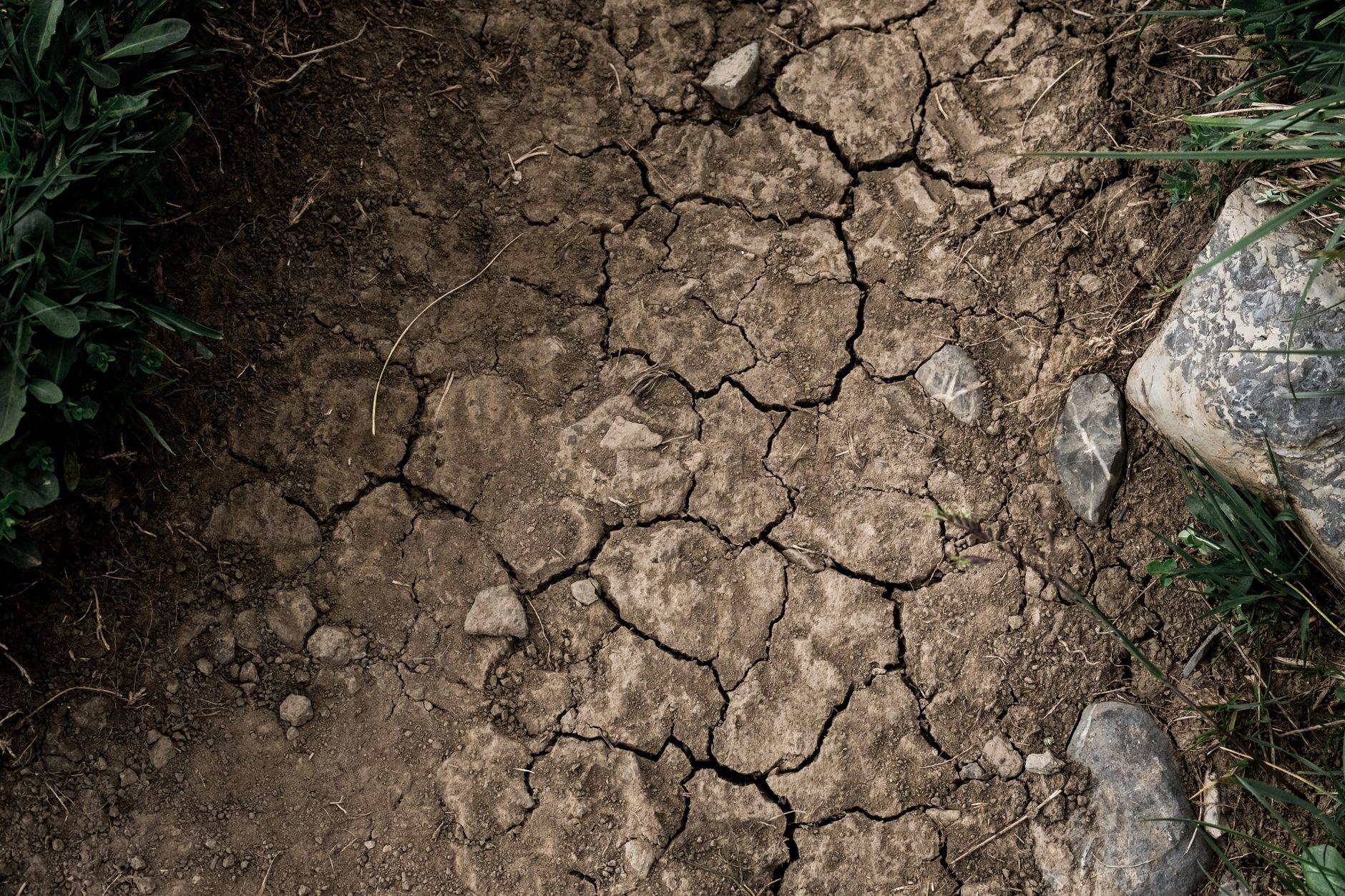
If you've ever tried to dig a fence post hole in Buffalo in August, you already know about the soil. The shovel goes in two inches and stops. In April the same ground is sticky enough to pull a boot off.
That's clay, or at least heavy clay loam, and a lot of lawns across Wright County and western Hennepin grow on it. It changes how a lawn should be fed, watered and aerated, and it explains a lot of the problems people blame on their grass.
Where the clay comes from
Much of this area sits on glacial till, the mix of clay, silt, sand and rock the glaciers left behind. Soils that formed on it tend toward loam and clay loam, and plenty of yards run heavier than that. There are sandy pockets too, especially closer to the Mississippi, so not every yard in Otsego or Albertville is clay. A soil test tells you what you actually have.
New construction makes it worse. On most subdivisions the topsoil gets stripped during grading, heavy equipment packs down what's left, and then a thin layer of topsoil goes back on before sod. The grass ends up rooted in a few inches of decent soil sitting on compacted subsoil. That's why a ten year old lawn in a newer St. Michael or Buffalo development can look tired no matter how often it gets fed.
What clay does to a lawn
Clay particles are tiny and flat, and they pack together tightly. That gives clay two sides. It holds water and nutrients better than sandy soil, which is a real advantage. It also drains slowly, has very little air space, and compacts under foot traffic and mowers.
Compaction is the one that hurts. Roots need air as much as they need water, and in compacted clay they stay in the top inch or two. The lawn browns fast in a dry July and puddles after a heavy rain. Thatch builds up faster as well, because the soil life that would break it down needs oxygen to work.
Why core aeration matters more on clay
Core aeration pulls plugs of soil out of the lawn and leaves open channels behind. On sandy soil that's a nice extra. On clay it's the main way air and water get back into the root zone. Fertilizer and seed follow the holes down, and the plugs left on the surface break apart over a couple of weeks.
A few details matter more on clay than anywhere else:
- Moisture. Dry clay is too hard for the tines to go in, and soggy clay smears instead of coring. Aerate a day or two after a good rain or watering.
- Frequency. Compacted clay lawns usually benefit from aeration every year, where sandy lawns can often go longer.
- Hollow tines. Spike aerators push soil sideways and can add compaction around each hole.
- Timing. Late August through September is the best window here, because the lawn recovers in cool weather and any seed dropped into the holes has time to establish before winter.
Our aeration and seeding service runs in that fall window. If you missed it this year, put next August on the calendar now.
Feeding a clay lawn without wasting it
Clay holds nutrients well, so a clay lawn rarely needs more fertilizer than a sandy one. It needs better timing.
The biggest waste is runoff. Compacted clay takes in water slowly, so a heavy rain right after a quick-release application can carry granules and dissolved nitrogen off the lawn and into the street before any of it soaks in. From the curb it goes to the storm drain and on to the nearest lake or creek. A few habits keep it on the grass:
- Use slow-release nitrogen, which feeds the lawn over weeks instead of all at once. That's what our fertilization program is built on.
- Skip applications right before a big storm, and never spread fertilizer on frozen ground.
- Sweep any granules off the driveway and street back onto the lawn.
- Test before adding phosphorus. Minnesota restricts phosphorus in lawn fertilizer unless a soil test shows a need or you're establishing new turf.
Fall feeding matters on clay for the same reason it matters on any Minnesota lawn, since roots keep growing after the top stops. Our fall fertilization schedule walks through what goes down and when.
Building better soil over two or three seasons
No amendment turns clay into loam, but the way clay behaves can change a lot, and soil biology does most of that work.
Organic matter and active soil life bind clay particles into small crumbs with pore space between them. That crumb structure lets air and water move through ground that would otherwise act like a solid block. Our soil improvement service works on this with compost-tea topdressing and liquid humic acid, applied in spring and fall, to rebuild the microbial life in the root zone. The effect is cumulative. Paired with yearly core aeration, the change over two or three seasons tends to show up in how the lawn handles a hot, dry stretch and in how much more it gets out of each fertilizer application.
Two shortcuts come up every year. Gypsum helps on sodium-heavy soils, which are uncommon in this part of Minnesota, and on typical Wright County clay it does very little for structure. Sand is the other one. A thin layer spread over clay doesn't loosen it, and you would need enormous amounts to change the texture at all.
Watering clay without runoff
Clay takes water in slowly, so a sprinkler running an hour straight often sends a good share of it down the sidewalk. Split the same amount into two or three shorter cycles with a break between them, and more of it soaks in where the roots are. Water deeply and less often, so roots have a reason to follow the moisture down.
Frequently asked questions
Is the soil in Buffalo and Wright County mostly clay?
Much of Wright County formed on glacial till, which produces loam, clay loam and heavier clay soils, and many lawns in Buffalo, Delano, Rockford and St. Michael grow on them. Newer developments often have compacted subsoil under a thin layer of topsoil. Sandy pockets exist, especially near the Mississippi, so a soil test is the only way to know what is in your yard.
How often should a clay lawn be core aerated?
Most compacted clay lawns benefit from core aeration once a year. In Minnesota the best window is late August through September, when the lawn recovers in cool weather and overseeding has time to establish before winter. Aerate when the soil is moist, never bone dry or soggy.
Does gypsum break up clay soil in Minnesota?
Rarely. Gypsum improves structure on sodium-heavy soils, which are uncommon in the West Metro. On typical Wright and Hennepin County clay it does little. Annual core aeration and organic matter built up over several seasons do far more.
How long does it take to improve clay soil under a lawn?
Plan on two to three seasons. Compost-tea topdressing and humic acid applied in spring and fall, combined with annual core aeration, build soil structure gradually. Gains in the first year are modest, and the difference in drought tolerance is usually clear by the second or third season.
Why does fertilizer run off my lawn?
Compacted clay absorbs water slowly, so heavy rain soon after a fertilizer application can carry granules and dissolved nutrients into the street and storm drains. Slow-release nitrogen reduces the loss. So does skipping applications before big storms or on frozen ground, and sweeping stray granules off pavement back onto the grass.